
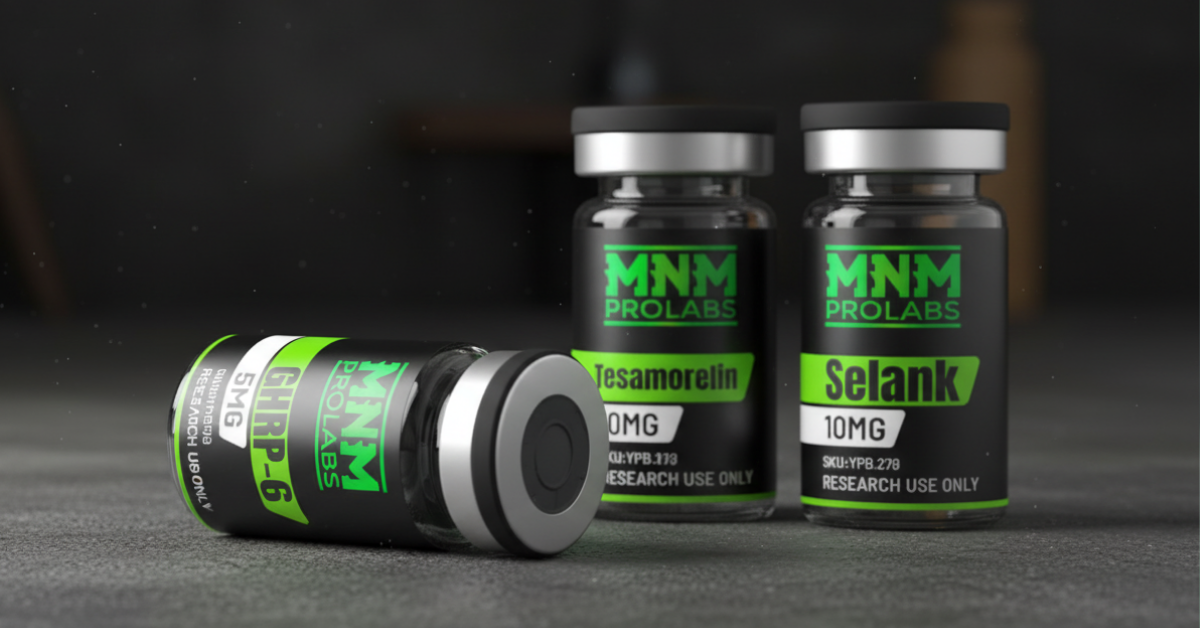
MNM ProLabs | October 12, 2026
Introduction: A New Era in Human Health and Performance
The world of medicine, biotechnology, and human performance is experiencing a significant transformation. At the center of this movement is a category of molecules that has attracted extraordinary attention from researchers, physicians, pharmaceutical companies, athletes, and longevity enthusiasts: peptides.
Once discussed primarily within research laboratories and specialized medical practices, peptides are now part of mainstream conversations about weight management, metabolic health, tissue repair, muscle preservation, and healthy aging.
Much of that attention has been driven by the remarkable clinical success of peptide-based medications targeting appetite and metabolism. Meanwhile, experimental compounds promoted for injury recovery, inflammation, and growth hormone stimulation have become increasingly popular throughout fitness and wellness communities.
But the peptide revolution is more complicated than social media often suggests.
Some peptides have undergone extensive clinical trials, demonstrated meaningful therapeutic benefits, and received approval from the U.S. Food and Drug Administration (FDA). Others remain experimental, with promising animal studies but limited human research. Still others are marketed aggressively despite major unanswered questions about safety, effectiveness, manufacturing quality, and long-term exposure.
In 2026, the difference between legitimate therapeutic innovation and unsupported marketing claims has never been more important.
Recent developments involving retatrutide, CagriSema, semaglutide, BPC-157, TB-500, MOTS-c, and regulatory changes surrounding compounded peptides highlight both the tremendous potential and significant challenges of this growing field.
For athletes, bodybuilders, healthcare professionals, and anyone interested in optimizing long-term health, understanding these developments is essential.
1. What Are Peptides, and Why Are They Important?
Peptides are chains of amino acids connected through peptide bonds. Amino acids are the building blocks of proteins, and peptides participate in numerous biological processes, including hormone signaling, appetite regulation, immune responses, and cellular communication.
Although peptides and proteins are closely related, peptides are generally smaller molecules. Many naturally occurring hormones and signaling compounds belong to this category.
Examples include insulin, glucagon, and glucagon-like peptide-1 (GLP-1).
Their biological importance comes from their ability to communicate with specific receptors and influence cellular activity.
Depending on their molecular structure, peptides can stimulate or inhibit particular pathways involved in metabolism, hormone release, tissue maintenance, and other physiological functions.
Modern pharmaceutical research uses this biological specificity to develop medications that target particular diseases or processes.
However, the term peptide does not automatically indicate that something is beneficial, safe, or medically effective.
A peptide’s effects depend on its structure, dose, route of administration, receptor activity, and the individual receiving it.
Some are highly effective prescription drugs. Others have never been adequately studied in humans.
That distinction provides the foundation for understanding the latest developments in 2026.
2. Retatrutide: A Major Breakthrough in Obesity Research
Among the most closely watched investigational treatments of 2026 is retatrutide, an experimental medication developed by Eli Lilly.
Retatrutide targets three hormone receptors involved in metabolism: GLP-1, glucose-dependent insulinotropic polypeptide (GIP), and glucagon.
This combination differentiates retatrutide from medications such as semaglutide, which acts on GLP-1 receptors, and tirzepatide, which targets GLP-1 and GIP receptors.
Researchers hope that targeting three pathways can produce substantial improvements in body weight, blood glucose, and obesity-related complications.
In May 2026, Eli Lilly announced results from its Phase 3 TRIUMPH-1 clinical trial.
Participants receiving the investigational 12 mg treatment achieved an average body-weight reduction of 28.3% over 80 weeks, according to the company’s reported results.
Approximately 45.3% achieved weight loss of at least 30%.
These results represent a major development in obesity pharmacotherapy, although comparisons with other medications require carefully controlled clinical studies.
Additional results announced in July 2026 strengthened interest in the treatment.
In TRIUMPH-2, participants with obesity or overweight and type 2 diabetes experienced average weight reductions reaching 20.8% at 80 weeks.
In TRIUMPH-3, participants with severe obesity and established cardiovascular disease experienced average reductions reaching 22.6%.
These outcomes suggest potential benefits extending beyond weight reduction alone.
Research has also explored changes in blood glucose control, knee osteoarthritis pain, and obstructive sleep apnea.
Nevertheless, important questions remain regarding long-term safety, treatment discontinuation, tolerability, and how effectively patients maintain weight loss over time.
As of October 12, 2026, retatrutide remains investigational and is not FDA-approved. Lilly has announced plans to pursue regulatory submission in 2027.
Products being sold outside legitimate clinical research should not be confused with the pharmaceutical formulation evaluated in controlled trials.
Sources: Eli Lilly TRIUMPH-1, TRIUMPH-2, and TRIUMPH-3 announcements, May–July 2026.
3. CagriSema and the Next Generation of Metabolic Medicine
Another significant development involves CagriSema, Novo Nordisk’s investigational combination of semaglutide and cagrilintide.
Semaglutide acts on GLP-1 receptors, while cagrilintide is a long-acting amylin analogue.
Amylin is a hormone involved in satiety and regulation of food intake.
Combining these mechanisms may help reduce appetite and support weight management through complementary biological pathways.
In September 2026, Novo Nordisk reported results from the Phase 3 REIMAGINE 5 and REDEFINE 9 trials.
The company reported a 12.4% weight reduction with one CagriSema regimen compared with 9.1% for the studied 5 mg tirzepatide group in REIMAGINE 5.
In REDEFINE 9, Novo Nordisk reported clinically meaningful weight loss reaching 21% under the trial’s specified analysis.
These figures should not be interpreted as proof that CagriSema outperforms all tirzepatide dosing regimens. The findings apply to the particular populations, doses, and methods studied.
CagriSema’s development illustrates a broader pharmaceutical strategy: combining complementary hormone pathways rather than relying on a single receptor target.
The implications extend to diabetes management, obesity medicine, cardiometabolic health, and potentially the treatment of other metabolic disorders.
Researchers are increasingly investigating not simply how much weight a medication can help patients lose, but how treatment affects overall health and physical function.
That evolution could influence the next decade of obesity treatment.
Source: Novo Nordisk, September 21, 2026.
4. Semaglutide Expands Its Role in Modern Healthcare
While experimental treatments attract headlines, semaglutide continues to influence clinical practice.
Medications containing semaglutide have established roles in type 2 diabetes and obesity management, depending on the product and FDA-approved indication.
In March 2026, the FDA approved a higher-dose injectable Wegovy formulation, known as Wegovy HD, containing 7.2 mg semaglutide.
This expanded treatment options for eligible adult patients requiring chronic weight management.
Another important development has been oral semaglutide for obesity.
Novo Nordisk announced in June 2026 that its Wegovy pill had surpassed three million prescriptions since its January launch, based on the company’s reporting.
The availability of oral treatment represents an important shift for patients who prefer tablets over injections.
However, not every medication described as an oral GLP-1 treatment is technically a peptide. For example, some newer GLP-1 receptor agonists are small molecules designed to mimic aspects of peptide-hormone activity.
This distinction matters when discussing the broader peptide industry.
Clinicians must also consider adverse effects, contraindications, gastrointestinal tolerability, and individual medical history.
Common concerns with GLP-1-based treatments include nausea, vomiting, diarrhea, constipation, and complications associated with dehydration or inadequate nutrition.
Patients should follow approved product labeling and individualized medical guidance.
The continued expansion of semaglutide demonstrates how peptide-based therapies can move from experimental research into widely used medical treatment.
Sources: FDA, March 19, 2026; Novo Nordisk, June 7, 2026.
5. BPC-157: The Recovery Peptide Generating Controversy
Within bodybuilding, sports medicine, and injury-recovery communities, few experimental compounds receive as much attention as BPC-157.
BPC-157 is a synthetic peptide investigated primarily in preclinical research.
Laboratory and animal studies have explored its possible involvement in wound healing, gastrointestinal protection, inflammation, and tissue responses to injury.
These findings have generated interest among individuals dealing with tendon problems, joint discomfort, muscle injuries, and persistent training-related pain.
However, there is an important difference between identifying biological effects in animal studies and proving that a medication safely improves healing outcomes in humans.
Despite widespread online claims, BPC-157 does not have an established clinical indication supported by substantial, high-quality human trials.
It is not FDA-approved for treating tendon injuries, joint conditions, muscle damage, or gastrointestinal disorders.
Regulators have also raised concerns involving potential immune reactions, peptide-related impurities, and inadequate characterization of compounded products.
In July 2026, the FDA’s Pharmacy Compounding Advisory Committee reviewed BPC-157-related substances as part of a broader examination of experimental peptides.
The review reflected growing interest in whether these compounds could be appropriately evaluated for pharmaceutical compounding.
An advisory review, however, is not equivalent to FDA drug approval or a determination that a compound is safe and effective.
For athletes, the essential point is that promising laboratory findings do not replace controlled human clinical evidence.
A damaged tendon, for example, requires appropriate diagnosis, rehabilitation, progressive loading, and sometimes specialist intervention.
BPC-157 should not be viewed as a proven substitute.
Sources: FDA peptide safety materials and July 2026 advisory committee records.
6. TB-500: Interest in Tissue Repair and Regeneration
Another compound frequently discussed alongside BPC-157 is TB-500, generally marketed as a synthetic peptide related to thymosin beta-4.
Thymosin beta-4 is a naturally occurring molecule involved in cellular processes such as actin regulation and tissue repair.
Researchers have investigated its potential relevance to wound healing and regeneration.
These biological properties have contributed to the popularity of TB-500 in performance and recovery discussions.
Advocates commonly associate it with improved flexibility, reduced inflammation, enhanced healing, and shorter recovery periods.
However, those claims should be considered experimental rather than established clinical benefits.
Commercial products labeled TB-500 may not be chemically identical to full-length thymosin beta-4 formulations studied in research.
That creates additional uncertainty when attempting to apply published scientific findings to products sold online.
The FDA included TB-500-related substances in its July 2026 compounding advisory review, focusing on proposed wound-healing applications.
There remains insufficient reliable human clinical evidence to recommend TB-500 as an established treatment for sports injuries.
It is also important to recognize that an intervention affecting tissue growth or repair pathways may carry risks that are not apparent in early research.
Until adequate human studies establish efficacy, appropriate dosing, and long-term safety, claims of accelerated athletic recovery remain unproven.
7. Growth Hormone Peptides: Ipamorelin, CJC-1295, and Related Compounds
Growth hormone-related peptides remain a major topic within bodybuilding and anti-aging discussions.
Compounds such as ipamorelin and CJC-1295 are investigated for their ability to influence growth hormone signaling.
Ipamorelin is a growth hormone secretagogue that acts through the ghrelin receptor system.
CJC-1295 is designed to stimulate growth hormone release through growth hormone-releasing hormone receptor activity.
Because growth hormone participates in protein metabolism, body composition, and tissue development, these substances attract interest from individuals seeking muscle growth, fat reduction, recovery, and age-related wellness benefits.
But increasing growth hormone or IGF-1 concentrations does not automatically translate into improved strength, faster recovery, or enhanced longevity.
The FDA has identified safety concerns involving certain compounded peptide preparations, including potentially serious adverse reactions, immune responses, and insufficient human safety data.
Ipamorelin and CJC-1295 are not FDA-approved for general bodybuilding or anti-aging applications.
It is also important to distinguish these compounds from established medical treatments.
For example, tesamorelin is an FDA-approved growth hormone-releasing factor analogue for reducing excess abdominal fat in certain adults with HIV-associated lipodystrophy.
That does not mean tesamorelin is approved for general weight loss or athletic performance enhancement.
For individuals considering hormone-related treatment, appropriate endocrine evaluation is far more important than relying on online hormone-optimization claims.
8. MOTS-c and the Search for Better Metabolic Health
MOTS-c is a mitochondria-associated peptide that has attracted considerable scientific interest.
Mitochondria are cellular structures involved in energy production and metabolic regulation.
Researchers have explored how MOTS-c may influence metabolic signaling, cellular stress responses, glucose utilization, and physical adaptation.
Early research has generated hypotheses about potential applications involving obesity, aging, and metabolic dysfunction.
This has led to speculation about enhanced exercise endurance, improved insulin sensitivity, and more efficient cellular energy management.
However, findings from laboratory models cannot establish meaningful clinical benefits in humans.
MOTS-c remains experimental, and the FDA has identified insufficient human safety data for proposed compounded uses.
The agency reviewed MOTS-c-related substances during its July 2026 advisory committee process.
The scientific interest is understandable: therapies that safely influence metabolic flexibility and cellular energy regulation could have substantial medical applications.
Nevertheless, there is currently no established basis for recommending MOTS-c as a performance supplement or anti-aging treatment.
For athletes, maintaining metabolic health through consistent exercise, adequate nutrition, sufficient sleep, and management of underlying medical conditions remains far better supported.
MOTS-c is an important research topic, but clinical promises must await clinical evidence.
9. Peptides, Muscle Preservation, and the Future of Weight Management
One increasingly important discussion surrounding obesity treatments involves the preservation of muscle during significant weight reduction.
When people lose substantial amounts of body weight, they typically lose a combination of fat mass and fat-free mass.
Fat-free mass includes skeletal muscle but also water, organs, and other nonfat tissues.
Consequently, a reduction in lean mass does not necessarily represent an equivalent loss of functional muscle.
This distinction is especially important for older adults, competitive athletes, and individuals who already have relatively low muscle mass.
The emerging research question is whether future therapies can help patients reduce excess body fat while preserving strength and physical function.
Pharmaceutical researchers are exploring combinations of metabolic treatments and other agents targeting muscle-related biological pathways.
However, there is not yet sufficient evidence to recommend experimental muscle-preserving peptide combinations for healthy athletes.
Established strategies remain central to protecting muscle during weight loss.
These include appropriately structured resistance training, adequate dietary protein, individualized energy intake, and sufficient recovery.
Researchers must also measure real-world outcomes such as strength, mobility, and metabolic function rather than relying entirely on scale weight or imaging results.
The future of effective weight management should be defined by better health, not simply a lower number on the scale.
10. Anti-Aging Peptides: Scientific Possibility Versus Marketing
Longevity research has become an increasingly prominent part of the biotechnology industry.
Several experimental peptides are marketed with claims involving cellular rejuvenation, enhanced cognition, mitochondrial support, improved sleep, and age-related recovery.
Examples discussed in wellness communities include Epitalon, Semax, Selank, and GHK-Cu.
These compounds differ considerably in molecular structure and proposed mechanism.
GHK-Cu, a copper-binding peptide, has attracted interest in dermatology and skin-related research.
Epitalon has been discussed in connection with aging biology and sleep-related pathways.
Semax and Selank have been studied in limited research contexts involving neurological or behavioral outcomes.
However, evidence supporting their broad commercial use for longevity or cognitive enhancement remains insufficient.
The FDA considered several of these compounds during its 2026 regulatory reviews.
A major challenge in anti-aging medicine is the difference between modifying a laboratory biomarker and demonstrating that an intervention actually extends healthy human lifespan.
No experimental peptide should be described as proven to reverse biological aging without rigorous, reproducible human evidence.
The strongest available foundations for healthy aging remain physical activity, nutritional adequacy, cardiovascular risk management, sleep, and preventive healthcare.
Research may eventually produce additional interventions, but enthusiasm should not replace scientific validation.
11. Peptide Medicine Expands Beyond Fitness and Weight Loss
Although obesity medications dominate public discussion, peptide science has important applications far beyond fitness.
In September 2025, the FDA granted accelerated approval to Forzinity, containing elamipretide, for qualifying patients with Barth syndrome.
Barth syndrome is a rare genetic disorder affecting mitochondrial function and frequently associated with serious cardiac and muscular complications.
The approval represented an important development in treatments targeting mitochondrial-associated disease.
Accelerated approval allows earlier access based on qualifying evidence, but additional studies are required to verify clinical benefit.
Peptide research is also advancing in infectious disease, oncology, and targeted drug delivery.
Antimicrobial peptides are being investigated for their potential to interact with microbial membranes and address difficult infectious-disease challenges.
Other peptide-based technologies may help deliver therapies to particular tissues or cellular targets.
In oncology, peptide-receptor targeting has become an important strategy in precision medicine, including certain radiopharmaceutical approaches.
These developments demonstrate the breadth of the field.
Peptides are not exclusively associated with bodybuilding, weight loss, or anti-aging clinics.
They are part of a much larger effort to develop targeted medicines for complicated human diseases.
The strongest future breakthroughs may emerge from clinical applications that receive less attention on social media.
12. FDA Regulation: One of the Biggest Peptide Stories of 2026
Regulation has become a defining issue for the peptide industry.
On July 23 and 24, 2026, the FDA convened its Pharmacy Compounding Advisory Committee to review several peptide-related substances.
The substances included BPC-157, TB-500, KPV, MOTS-c, Semax, Epitalon, and emideltide.
The central question involved whether particular bulk substances should be eligible for use in qualifying pharmaceutical compounding under federal law.
This is different from determining whether a substance should receive FDA approval as a prescription medication.
Compounded drugs generally do not undergo the same premarket FDA review for safety, effectiveness, and manufacturing quality as approved medications.
Advisory committee recommendations are also nonbinding.
In October 2026, reporting indicated that federal officials were considering temporary pathways that might permit access to certain unapproved peptides through compounding pharmacies while further regulatory decisions were developed.
Supporters argue that supervised pharmacy access could reduce reliance on uncontrolled gray-market sellers.
Critics warn that broader access without adequate clinical evidence could expose patients to poorly understood risks.
As of this article’s publication, those discussions should not be interpreted as blanket FDA approval or unrestricted authorization for experimental peptides.
The ultimate regulatory outcome remains important for healthcare providers, compounding pharmacies, researchers, and consumers.
Any responsible expansion of access must address manufacturing quality, adverse-event reporting, patient counseling, and meaningful clinical oversight.
13. The Gray Market and the Importance of Product Quality
Rapid consumer interest has also encouraged the growth of online peptide vendors.
Some websites advertise research materials while simultaneously presenting claims associated with weight loss, hormone optimization, recovery, or human performance.
This creates substantial regulatory and public health concerns.
In August 2026, the FDA issued warning letters to multiple companies marketing unapproved peptide products.
The agency specifically highlighted concerns about websites offering substances intended for human administration while using research-only disclaimers.
A label stating “research use only” does not automatically make marketing lawful when surrounding representations establish an intended human drug use.
Quality is another major concern.
Injectable products require appropriate controls for sterility, identity, potency, endotoxins, and contamination.
A certificate of analysis may provide useful information about a particular test, but it is not equivalent to FDA approval or proof that a finished injectable product is safe.
Improper storage, inaccurate concentrations, manufacturing impurities, and contamination can all create serious health risks.
Consumers should also understand that compounded products are not interchangeable with FDA-approved medications simply because they share a similar ingredient name.
For the peptide industry to develop responsibly, scientific integrity and transparent quality systems must remain fundamental priorities.
14. What These Developments Mean for Athletes and Bodybuilders
The bodybuilding and performance communities are among the most enthusiastic audiences for emerging peptide research.
Interest commonly focuses on fat reduction, muscle preservation, injury recovery, hormonal signaling, and training readiness.
Yet athletes must consider another factor: anti-doping rules.
Many peptide hormones, growth hormone secretagogues, and certain experimental substances are prohibited under World Anti-Doping Agency regulations.
Depending on the substance and governing organization, use may expose competitors to significant disciplinary consequences.
Athletes should check the current prohibited list and the rules applicable to their federation rather than assuming a compound is permissible because it can be purchased online.
From a performance perspective, it is also important to distinguish outcomes that look promising on paper from outcomes that improve competition results.
Changes in body weight, growth hormone concentrations, or cellular signaling do not necessarily establish better strength, endurance, tissue resilience, or recovery.
The most successful long-term athletes continue to depend on progressive training, appropriate energy intake, sufficient protein, sleep, injury prevention, and disciplined rehabilitation.
Future therapies may complement medical care in specific circumstances, but experimental peptides should not replace evidence-based performance practices.
15. What to Watch in 2027 and Beyond
The next phase of peptide innovation will likely be shaped by several important developments.
First, additional regulatory submissions for advanced obesity therapies may introduce new treatment options.
Second, researchers will continue investigating whether combining metabolic pathways can improve effectiveness while reducing adverse effects.
Third, better long-term data may clarify how substantial weight loss influences muscle, bone, cardiovascular health, and quality of life.
Fourth, FDA decisions surrounding experimental peptide compounding could significantly influence legal access and clinical oversight.
Fifth, advancements in manufacturing, delivery systems, and molecular design may support safer and more precise peptide-based medicines.
Finally, researchers studying mitochondrial disorders, infection, cancer, and tissue-specific drug delivery may broaden the medical impact of peptides far beyond their present public reputation.
The most consequential progress will not necessarily come from the compound receiving the most social media attention.
It will come from therapies demonstrating meaningful patient benefits through carefully designed clinical research.
Conclusion: The Future Is Promising, but Evidence Must Lead
The peptide industry stands at an extraordinary point in its development.
Clinical advances involving semaglutide, retatrutide, and CagriSema demonstrate the potential of hormone-targeted treatments to transform metabolic medicine.
At the same time, growing interest in BPC-157, TB-500, MOTS-c, and growth hormone-related peptides reveals substantial public demand for improved recovery, physical performance, and healthy aging.
However, scientific promise and established medical benefit are not interchangeable.
Approved medications, investigational treatments, and experimental research compounds must be evaluated according to their own evidence.
The future of peptide medicine is likely to produce important opportunities for improving human health.
The challenge is ensuring that innovation develops alongside patient safety, regulatory accountability, transparent research, and responsible communication.
For the MNM ProLabs community, the guiding principle remains straightforward:
Understand the science. Respect the evidence. Prioritize long-term health. And never confuse marketing excitement with proven performance.
Medical disclaimer: This article is provided for educational and informational purposes only. It does not constitute medical advice, recommend the use of experimental peptides, or replace consultation with a licensed healthcare professional. Readers should verify current FDA approvals, warnings, and prescribing information before making healthcare decisions.
References and Sources
- U.S. Food and Drug Administration. (2026, March 19). FDA Approves Fourth Product Under National Priority Voucher Program, Higher Dose Semaglutide.
https://www.fda.gov/news-events/press-announcements/fda-approves-fourth-product-under-national-priority-voucher-program-higher-dose-semaglutide - Eli Lilly and Company. (2026, May 21). Lilly’s triple agonist, retatrutide, delivered powerful weight loss in pivotal Phase 3 obesity trial.
https://investor.lilly.com/news-releases/news-release-details/lillys-triple-agonist-retatrutide-delivered-powerful-weight-loss - Eli Lilly and Company. (2026, July 23). Retatrutide successful in two additional Phase 3 obesity trials, delivering significant improvements in weight and A1C.
https://investor.lilly.com/news-releases/news-release-details/lillys-triple-agonist-retatrutide-successful-two-additional - Eli Lilly and Company. (2026, June 6). Retatrutide results involving weight, diabetes, knee osteoarthritis, and obstructive sleep apnea.
https://investor.lilly.com/news-releases/news-release-details/lillys-triple-agonist-retatrutide-drove-substantial-improvements - Novo Nordisk. (2026, September 21). Novo’s CagriSema delivers superior weight loss versus tirzepatide in REIMAGINE 5 trial.
https://www.novonordisk.com/news-and-media/news-and-ir-materials/news-details.html?id=916774 - Novo Nordisk. (2026, June 7). Wegovy pill prescriptions surpass three million.
https://www.novonordisk.com/news-and-media/news-and-ir-materials/news-details.html?id=916566 - U.S. Food and Drug Administration. (2026). July 23–24 Meeting of the Pharmacy Compounding Advisory Committee.
https://www.fda.gov/advisory-committees/advisory-committee-calendar/july-23-24-2026-meeting-pharmacy-compounding-advisory-committee-07232026 - U.S. Food and Drug Administration. (2026). Certain Bulk Drug Substances for Use in Compounding That May Present Significant Safety Risks.
https://www.fda.gov/drugs/human-drug-compounding/certain-bulk-drug-substances-use-compounding-may-present-significant-safety-risks - U.S. Food and Drug Administration. (2026). FDA’s Concerns with Unapproved GLP-1 Drugs Used for Weight Loss.
https://www.fda.gov/drugs/drug-alerts-and-statements/fdas-concerns-unapproved-glp-1-drugs-used-weight-loss - U.S. Food and Drug Administration. (2026, August 24). NuScience Peptides LLC—FDA Warning Letter.
https://www.fda.gov/inspections-compliance-enforcement-and-criminal-investigations/warning-letters/nuscience-peptides-llc-733652-08242026 - U.S. Food and Drug Administration. (2026, August 24). Peak Performance Peptides—FDA Warning Letter.
https://www.fda.gov/inspections-compliance-enforcement-and-criminal-investigations/warning-letters/peak-performance-peptides-735127-08242026 - U.S. Food and Drug Administration. (2025, September 19). FDA Grants Accelerated Approval to First Treatment for Barth Syndrome.
https://www.fda.gov/news-events/press-announcements/fda-grants-accelerated-approval-first-treatment-barth-syndrome - U.S. Food and Drug Administration. (2025). EGRIFTA WR (tesamorelin) Prescribing Information.
https://www.accessdata.fda.gov/drugsatfda_docs/label/2025/022505s020lbl.pdf - Zhang and colleagues. (2026). Anticancer Potential of Antimicrobial Peptides: Mechanisms, Clinical Application, Challenges, and Future Prospects. Drug Development Research.
https://doi.org/10.1002/ddr.70383 - The Washington Post. (2026, October 7). Trump administration paving way for temporary sale of some unapproved peptides.
https://www.washingtonpost.com/health/2026/10/07/trump-administration-paving-way-temporary-sale-some-unapproved-peptides/ - World Anti-Doping Agency. Prohibited List and related anti-doping resources. Consult the edition applicable to the competition date.
https://www.wada-ama.org/en/prohibited-list